
You know the feeling. You open your banking app on a Sunday evening, stare at the number on the screen, and wonder where it all went. You weren’t extravagant. You didn’t book a holiday or buy anything particularly expensive. And yet, somehow, the money is gone — again.
If this sounds familiar, you are not alone, and more importantly, you are not bad with money. What you are dealing with is something far more complicated: a brain that was not designed for modern financial life, combined with an economic environment that has been engineered, very deliberately, to make you spend more than you planned to.
This article breaks down the psychology behind overspending — what’s actually happening in your brain when you reach for your card, why emotional triggers are so hard to resist, and what it practically takes to change the habit. No shame, no platitudes. Just the research and what to do with it.
The Numbers First: You Are Not the Exception
It helps to start with some data, because one of the most powerful things about understanding overspending is realising it’s not a personal failing — it’s a near-universal experience.
A 2024 survey by Clever Real Estate found that 78% of Americans make purchases they immediately regret, and 38% say they often know a purchase is reckless but make it anyway. Almost half — 46% — have missed paying a bill at some point because of non-essential spending. A separate survey by Self Financial in 2023 found that nearly 90% of respondents emotionally spend in some capacity, up from 77% just three years earlier.
These are not niche statistics about people in financial crisis. These are majority behaviours. The question, then, isn’t whether overspending is a widespread psychological pattern — it clearly is. The question is what drives it.

The Habit Loop: How Spending Becomes Automatic
In his widely-cited work on habit formation, journalist and author Charles Duhigg described behaviour as following a three-part loop: cue, routine, reward. A trigger appears, you respond with a behaviour, and that behaviour produces a feeling that reinforces the loop. Repeat it enough and the behaviour becomes automatic — you don’t consciously decide to do it. It just happens.
Spending fits this model almost too well. The cue might be boredom, stress, a notification from a shopping app, or even just walking past a particular shop. The routine is browsing and buying. The reward is a dopamine hit — a brief but real neurological boost that your brain files away as: ‘that felt good, do it again.’
Neuroscience confirms what this model implies. Research published in PMC (National Center for Biotechnology Information) confirms that behaviours which reliably trigger dopamine release are more likely to be repeated. The brain isn’t judging whether a behaviour is wise — it’s simply noting that it produced a pleasant chemical response and encoding that link for future use.
The problem is that dopamine doesn’t care about your rent payment. It doesn’t factor in your credit card balance. It responds to the anticipation of reward — sometimes even more powerfully than the reward itself — which is why browsing can feel almost as satisfying as buying, and why online shopping carts are such effective spending traps.
Key finding: Research from the University of North Carolina found that mobile payment transactions increased spending frequency by 10.7% and average transaction value by 9.4% compared to traditional payment methods. The faster and frictionless the payment, the weaker our psychological resistance to spending.
Emotional Spending: When Feelings Drive Financial Decisions
Of all the psychological drivers of overspending, emotional spending is probably the most significant — and the least talked about honestly.
A LendingTree survey of 2,000 Americans published in 2023 found that 63% of Americans admit their emotions directly influence their purchases. Among those who identified as emotional spenders, 76% said it had led them to overspend, and 39% had gone into debt as a direct result. Half of those surveyed viewed emotional spending as normal behaviour — which, statistically speaking, it largely is.
The emotions driving these purchases are not always negative. Stress is the most commonly cited trigger at 50%, but excitement, happiness, and boredom also feature prominently. This matters, because it means emotional spending isn’t simply about numbing pain — it’s about amplifying or regulating whatever mood you’re already in. Shopping, for many people, functions as an emotional thermostat.
A 2023 study by Deloitte, drawing on over 114,000 respondents globally, found that nearly 80% had made at least one purchase in the previous month specifically intended to improve their mood. Crucially, only 42% said they could actually afford those purchases.
Researchers at the Journal of Consumer Psychology have linked this pattern to a deeper issue around perceived control. When people feel powerless — over their job, their relationships, their circumstances — making purchasing decisions provides a temporary sense of agency. You can’t control the news cycle. But you can decide to buy the candle. That small act of choice registers as control, and it feels like relief.
The problem is that it’s temporary. The relief fades, often replaced by guilt or financial anxiety, which creates a new emotional pressure — and the cycle begins again.
Frictionless Payments: How Technology Removed the Last Safeguard
There is a reason cash spending feels different from tapping your phone at a checkout. It’s not psychological folklore — it’s well-documented research.
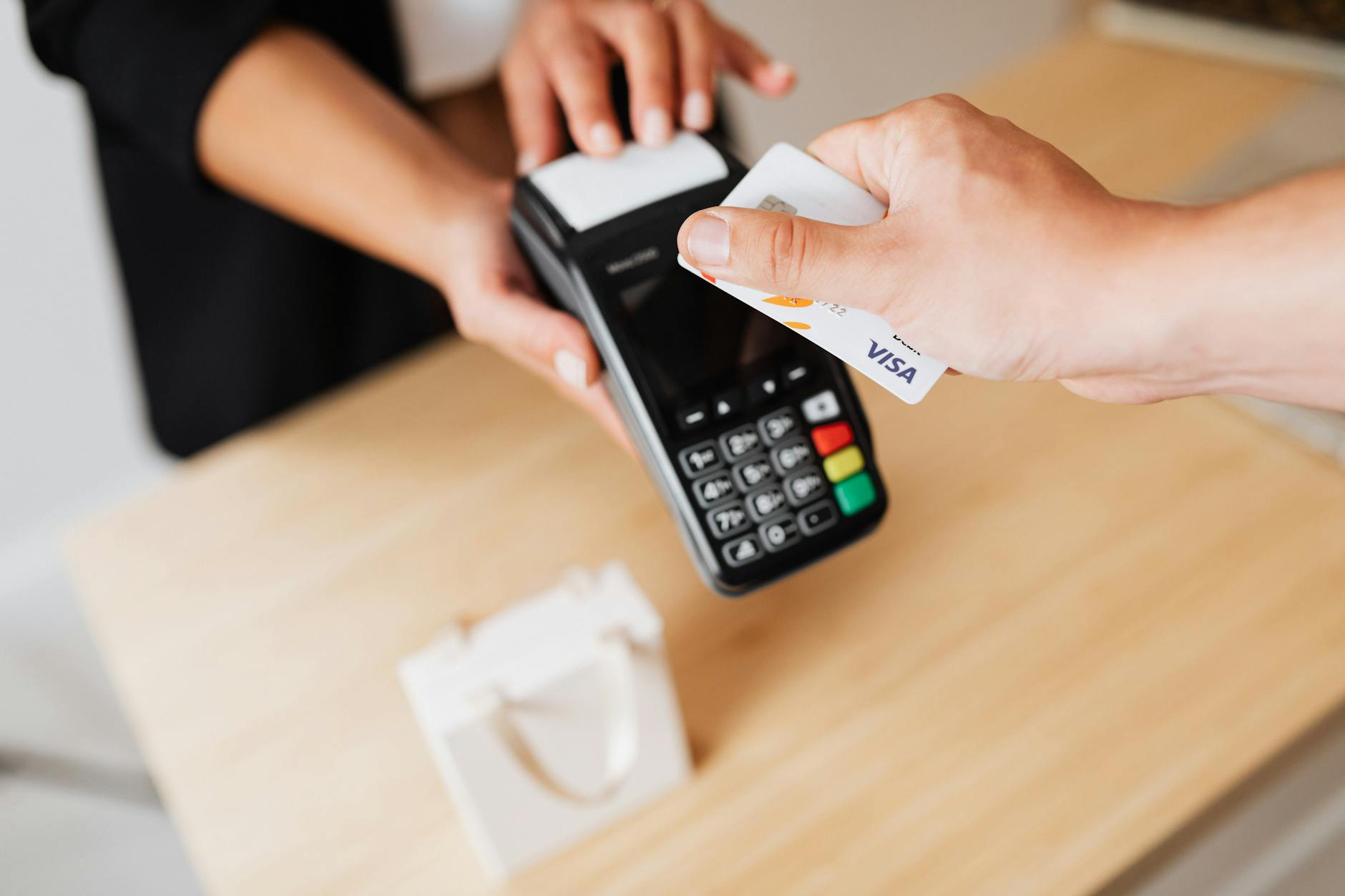
When you pay with cash, your brain registers the transaction physically. You watch the money leave your hand. There is a moment of what researchers call ‘payment pain’ — a mild but real aversion response that serves as a natural brake on spending. Studies consistently show that people spend more when using cards or digital wallets than when using physical cash, even when the amounts involved are identical.
Now consider what has happened to payment technology in the past decade. By 2023, more than 73% of consumers had made purchases through a mobile browser or website, up from 46% in 2019, according to McKinsey. More than half of Americans reported using digital wallets more often than traditional payment methods. Mobile payments take an average of 29 seconds versus 40 for a card — and that eleven-second difference, researchers at UNC found, is enough to meaningfully accelerate spending decisions.
Add to this the explosion of Buy Now Pay Later services. A LendingTree survey found that 52% of emotional spenders say BNPL options have made them more likely to spend emotionally. The monthly payments feel manageable. The psychological cost of the purchase is deferred. And the debt accumulates in a way that feels abstract — until it isn’t.
US credit card balances hit $1.05 trillion in 2023, up 13% year-on-year. Nearly 10% of balances were 90 days or more delinquent by Q4 of that year, the highest rate since 2011. These are not accidents. They are the predictable outcomes of a payments infrastructure deliberately designed to minimise friction between the impulse to spend and the act of spending.

Social Pressure: The Jones Family Never Went Away, They Just Got an Instagram
Leon Festinger’s social comparison theory, published in 1954, proposed that humans evaluate their own circumstances relative to those around them rather than against any objective standard. Seventy years later, this instinct has been weaponised.
A LendingTree survey found that nearly 40% of Americans have overspent specifically to impress someone else, most commonly on clothes, accessories, and gifts. Of those, 27% ended up in debt as a result — and 77% said they regretted it. More troubling: more than a third of respondents were no longer in contact with the person they were trying to impress.
Nearly 30% of Americans report feeling financially pressured to keep up with others. Among Gen Z, that figure rises to 51%. A 2023 survey by Bankrate found that 57% of Americans say social media has influenced them to spend money they hadn’t planned to.
The mechanism is straightforward: social media presents a highly curated, financially aspirational version of other people’s lives. Your brain — which hasn’t updated its social comparison software since the Pleistocene — processes this the same way it would process observing your neighbour’s new car. Except now the comparison happens dozens of times a day, across hundreds of acquaintances, and is actively optimised by platforms whose revenue depends on generating that sense of inadequacy.
42% of Americans say they cannot live within their means, according to a 2024 Wells Fargo survey. Financial experts point to social pressure, lifestyle creep, and emotional impulse spending as the leading causes — not income level alone.
How to Reprogram the Habit: What Actually Works
Here is where most financial advice gets lazy, offering generic tips that sound reasonable but ignore everything we’ve just covered about how spending habits actually form. Real behaviour change requires working with the brain’s reward architecture, not against it. Here is what the research supports.
1. Identify Your Triggers Before You Try to Change Anything
Willpower alone doesn’t work. The research on this is consistent: self-control is a finite resource that depletes with use, and it performs worst in the emotional states — stress, boredom, excitement — that most commonly trigger overspending.
What works instead is awareness. Keep a simple record for two weeks: every time you make an unplanned purchase, note what you were feeling immediately beforehand. Not what you were thinking — what you were feeling. Most people find three or four reliable emotional triggers. Once you can name them, you can design around them.
2. Introduce Friction Deliberately
If frictionless payments increase spending, friction reduces it. This doesn’t mean cutting up your cards. It means adding small deliberate obstacles between impulse and purchase. Remove saved card details from your most-used shopping sites. Delete one-click purchasing. Introduce a mandatory 24-hour waiting period for any non-essential purchase above a personal threshold — say, €30 or €40.
Research consistently shows that cooling-off periods dramatically reduce impulse purchases. The craving rarely survives the pause.
3. Replace the Routine, Not Just the Reward
The habit loop works by linking a cue to a routine and a reward. You cannot easily suppress the cue or eliminate the need for reward — but you can change the routine in between.
If stress is your trigger and shopping is your current response, the goal isn’t to simply ‘not shop’ when stressed. It’s to find a different behaviour that provides a comparable dopamine response. Exercise, particularly short intense bouts, is documented to produce stronger neurological reward signals than purchasing. Social connection — a call to a friend, a walk with someone — activates the same reward centres. Even a ten-minute break with a genuinely absorbing activity can interrupt the cue-to-purchase pipeline.
The replacement needs to be accessible in the moment, or it won’t compete. A gym that’s 30 minutes away won’t beat a shopping app that’s on your home screen.
4. Automate the Non-Negotiables
Savings, bills, and debt payments should leave your account the same day your income arrives. This removes them from the pool of money your brain perceives as available to spend. When you see a lower balance, the automatic spending baseline adjusts accordingly.
The psychological term for this is ‘pre-commitment’ — making decisions in advance, when you’re calm and rational, that protect you from future impulsive choices. It’s not about trusting yourself. It’s about acknowledging that your future self will sometimes be tired, stressed, or bored, and setting up systems that work anyway.
5. Separate ‘Need’ Money from ‘Want’ Money Visually
Budgeting works better when it’s visual and concrete rather than abstract. Having a single bank account makes it easy to convince yourself that any balance represents available money. Separate accounts for fixed expenses, savings, and discretionary spending force the brain to process each pot differently.
A 2023 Self Financial survey found that 48% of people who created a dedicated budgeting structure reported improvements in their financial wellbeing. The tool itself matters less than the act of making the categories physically distinct.
6. Audit Your Social Media Feed
This step is underrated. If your social feeds are consistently showing you content that creates a sense of lack — products you don’t have, lifestyles you can’t afford, people projecting wealth you’re not sure is real — the psychological pressure to spend in response to that content is constant and cumulative.
An audit doesn’t mean eliminating social media. It means being deliberate about what you allow into your comparison baseline. Muting accounts that consistently make you feel behind is a legitimate financial decision.
A Note on When to Get Help
For most people, overspending is a habit problem — addressable with the tools above, with consistency and patience. But for a smaller group, it becomes something more: compulsive buying disorder, or what financial therapists sometimes call oniomania.
Signs that spending has moved beyond habit and into compulsion include: an inability to stop despite wanting to, spending that is secretive or causes shame, purchases of items that are never used, and persistent financial damage despite genuine efforts to change.
Financial therapy — a relatively new field that blends financial planning with psychological support — exists specifically for this. If you recognise those patterns in yourself, it is worth knowing that help is available and that these are treatable conditions, not character flaws.
The Bottom Line
Overspending is not a discipline problem. It is a systems problem — driven by the way the brain forms habits, the way emotions hijack financial decisions, and the way modern technology has been specifically designed to reduce the psychological cost of spending.
The path out of it is not more willpower. It is better architecture: systems that remove friction from saving and add friction to impulse spending, emotional awareness that spots the trigger before it triggers, and social environments that don’t constantly tell you that you don’t have enough.
None of this is quick. But understanding why the problem exists is the necessary first step. Most people who overspend do so in the dark, convinced it’s a personal failing. It isn’t. It’s a predictable outcome of very human psychology meeting a very well-optimised commercial environment.
Now that you can see the system, you can start to change it.
Published on ClearMoneyLab.com | For informational purposes only. This article is not financial advice.
Leave a Reply